Energy
NEQSOL Plans Additional Investment in Ukraine’s UMCC, Targets Titanium Deep-Processing Upgrade

February 25, 2026

Min
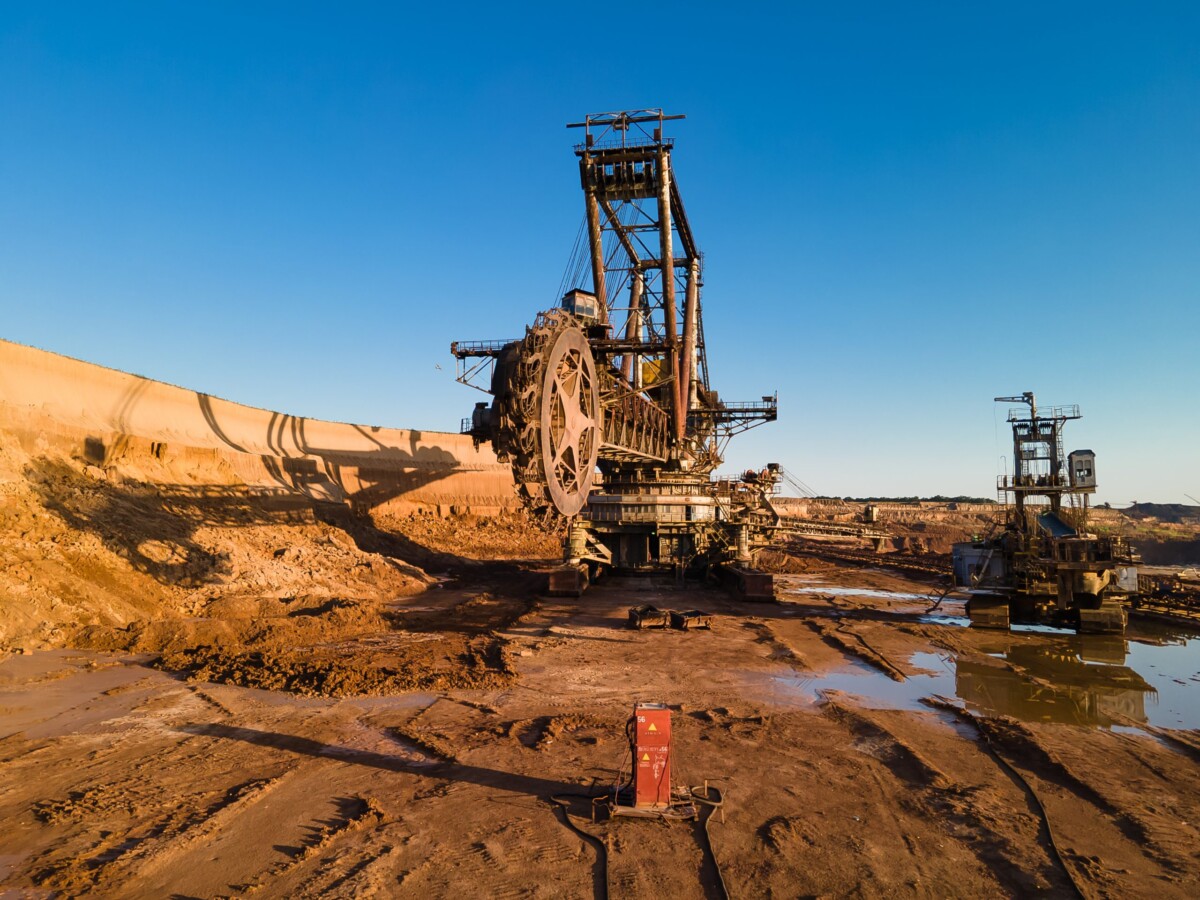
NEQSOL Holding plans to invest well beyond the minimum required under the privatization agreement after acquiring Ukraine’s United Mining and Chemical Company (UMCC), according to Volodymyr Lavrenchuk, the group’s country manager in Ukraine.
UMCC, described as Europe’s largest producer of titanium raw materials, was acquired by NEQSOL in 2024 for nearly UAH 4 billion (around $95 million). Lavrenchuk said NEQSOL has already mapped out a three-stage transformation strategy designed to modernize the enterprise, strengthen governance, and ultimately expand UMCC’s footprint in global markets.
The first stage focuses on tightening corporate governance and introducing international transparency standards, an early step NEQSOL sees as essential for unlocking broader modernization. The second stage targets expansion of the company’s resource base, including geological assessments to better understand and develop deposits. The third stage is the most ambitious: shifting UMCC from a primarily raw-material supplier into deeper titanium processing, a move intended to raise value added and strengthen export potential.
“This requires far greater investment than the UAH 400 million stipulated by the privatization terms,” Lavrenchuk said, signaling that the group’s plans go well beyond baseline obligations.
Lavrenchuk also underlined NEQSOL’s long-term approach to ownership, portraying UMCC as a strategic platform rather than a short-term portfolio holding.
“Throughout the existence of the holding, we have never sold a single asset. It is always a long-term investment,” he said.
UMCC currently supplies ilmenite, rutile, and zircon concentrates materials used in aerospace alloys, pigments for paints and plastics, and high-temperature industrial applications. Its key production assets include the Vilnohirsk Mining and Metallurgical Plant and the Irshansk Mining and Processing Plant. Prior to privatization, UMCC accounted for more than 70% of Ukraine’s ilmenite output and ranked among the world’s top 10 ilmenite producers.
NEQSOL finalized the acquisition of the government’s full stake in UMCC through its subsidiary, CEMIN Ukraine LLC, earlier in 2025. NEQSOL Holding Chairman Yusif Jabbarov described the deal as a strategic entry point into the global titanium industry and emphasized the group’s intention to modernize the company while expanding internationally.
“We are strengthening our position as a global investment group, while reaffirming our commitment to Ukraine,” Jabbarov said, adding that NEQSOL has begun discussions with international specialist companies to bring market and operational expertise to UMCC. He also pointed to the plan to meet all privatization obligations, pursue extensive modernization, and grow UMCC’s presence in global markets in line with strict compliance requirements for critical raw materials.
More detail on the deep-processing roadmap is expected after the first-stage corporate governance reforms are in place. Lavrenchuk said that phase should create the conditions for partnerships with U.S. and EU companies, enable adoption of new technologies, and support broader modernization while setting the stage for a potential shift from mining ilmenite and rutile toward producing higher-value outputs such as titanium pigments or metallic titanium.