
Finance

As Azerbaijan continues its strategic pivot toward the non-oil sector, an unexpected blueprint for economic diversification has emerged from the East. The "Korean Wave," or Hallyu, has transformed from a cultural curiosity into a $14.27 billion global powerhouse. For the Caucasus region, and Azerbaijan specifically, the rise of K-pop represents more than just a musical trend; it is a case study in how "Reputation Engineering" and aggressive cultural exports can redefine a nation's global economic footprint.
The Caspian Growth Engine
While traditional K-pop strongholds remain in Japan and the U.S., the Caucasus has emerged as a high-growth frontier. In Baku, the movement has moved past digital screens and into the physical economy. The 2025 Azerbaijan K-POP Festival saw a record-breaking surge in participation, while events like Dream Fest 2025 at Sea Breeze Resort highlighted a growing appetite for high-production international entertainment.
This cultural shift is driving a "K-Retail" boom in Azerbaijan. Local retail hubs like "Korean Shop Baku" and a myriad of pop-up beauty and fashion boutiques have expanded to meet the demands of a Gen Z and Millennial demographic, now the primary drivers of non-oil retail growth in the capital.
Data from 2025 indicates that Azerbaijan’s imports of Korean consumer goods, particularly beauty products and fashion. have grown by over 20% annually, directly correlating with the local popularity of groups managed by Korean conglomerates.
The HYBE Case Study: Scaling and Scrutiny
At the heart of this expansion is HYBE Corporation, the conglomerate behind global icons like BTS. HYBE reported record revenues of $1.65 billion in 2024. However, its journey highlights the complexities of rapid globalization.
Currently, HYBE and its founder, Bang Si-hyuk, are navigating a regulatory review by South Korea’s Financial Supervisory Service (FSS) regarding historical IPO processes.
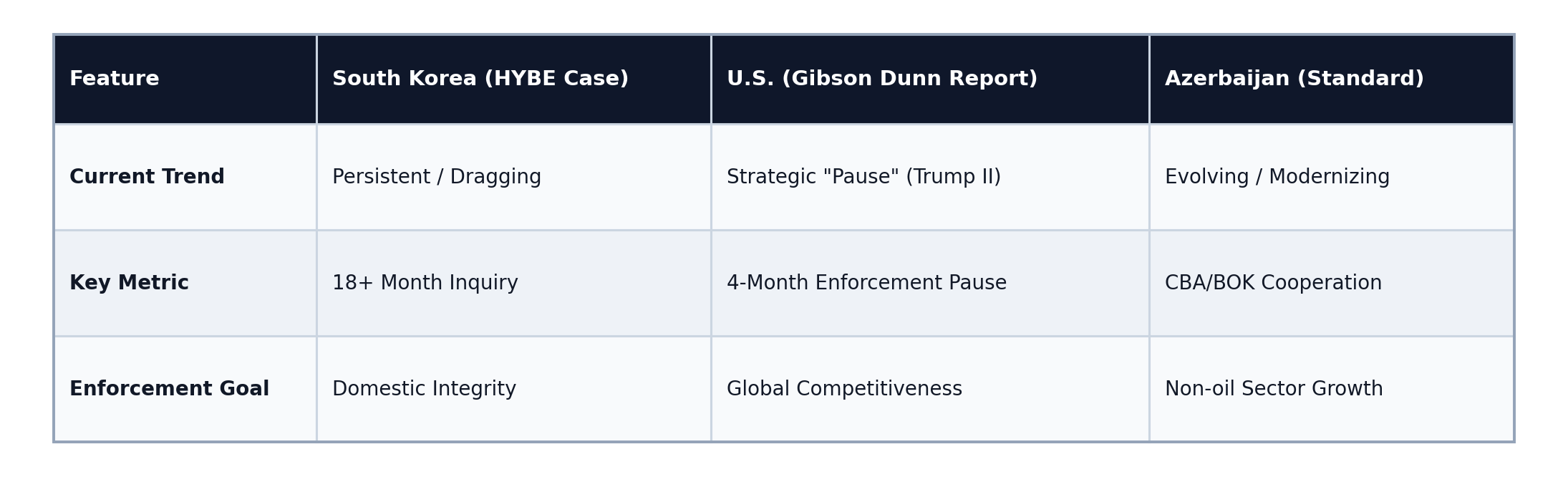
The inquiry has been noted for its "dragging" nature, lasting significantly longer than the typical six-month window for standard financial probes. Even so, Chairman Bang has maintained a posture of proactive cooperation. This transparency is a key differentiator in how modern entertainment conglomerates manage their most valuable asset: their global reputation.
A Comparative Lens: The Global "Pause" vs. Local Persistence
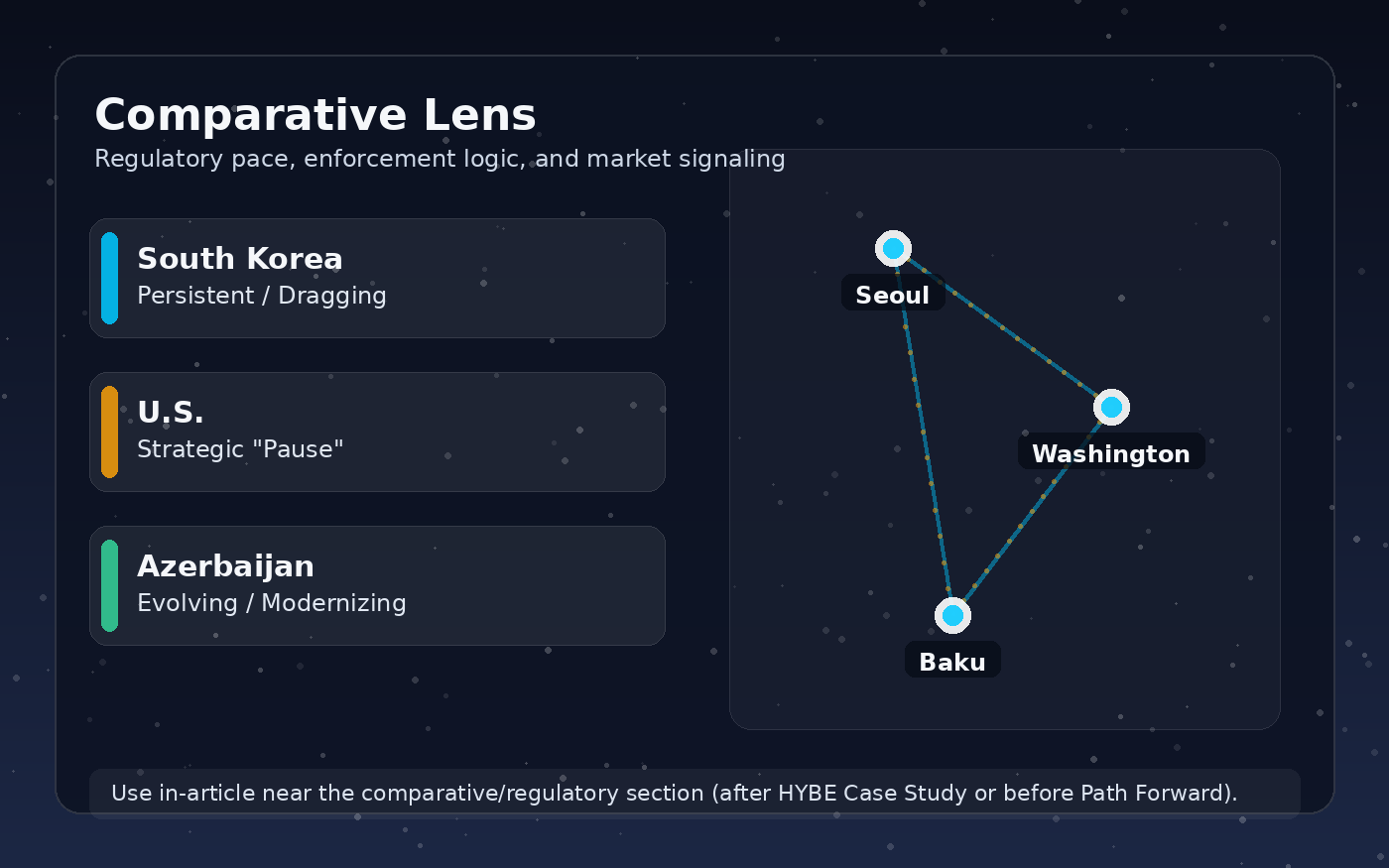
The pace of the HYBE inquiry stands in stark contrast to global trends highlighted in the Gibson Dunn 2025 Year-End FCPA Update. According to the report, the U.S. government recently implemented a historic "pause" on Foreign Corrupt Practices Act (FCPA) enforcement (Executive Order 14209) to ensure that over-enforcement doesn't disadvantage companies on the international stage.
This global trend toward "regulatory breathing room" makes the persistent, slow-moving investigation in Seoul appear increasingly anomalous. While U.S. enforcers are being directed to weigh "economic security" and "competitive parity," the South Korean FSS continues a high-intensity marathon of procedural scrutiny that some analysts argue risks stifling the very "cultural unicorns" the country worked so hard to build.
Regional Justice: The Isayev Parallel
For observers in the Caucasus, this "dragging" pace of justice mirrors certain complexities within Azerbaijan’s own legal evolution. The case of Ramin Isayev (and related investigations into regional financial figures) often features similarly long timelines and deep forensic dives.
However, there is a fundamental difference: while regional cases in the Caucasus are often private-ledger focused, the HYBE investigation is occurring in a fishbowl of global media.
For Azerbaijan, which recently signed financial cooperation agreements with the Bank of Korea in late 2025, the lesson is clear: as financial standards converge, the region must choose between the "high-velocity" enforcement models of the past or the more balanced, competition-aware frameworks now emerging in the West.
The Path Forward
The "dragging" nature of the investigations in Seoul is not a sign of failure, but a symptom of an industry in transition. For Azerbaijani entrepreneurs, the message is that global scale brings global scrutiny. As Baku and Seoul deepen their financial ties, the lessons of the "K-Economy", including transparency in governance and the patience required for regulatory maturity, will be essential for Azerbaijan’s own "Reputation Engineering" on the world stage.