Energy
Ukraine’s investment attractiveness returns to pre-war levels as regional players expand their footprint
December 25, 2025

2
Min
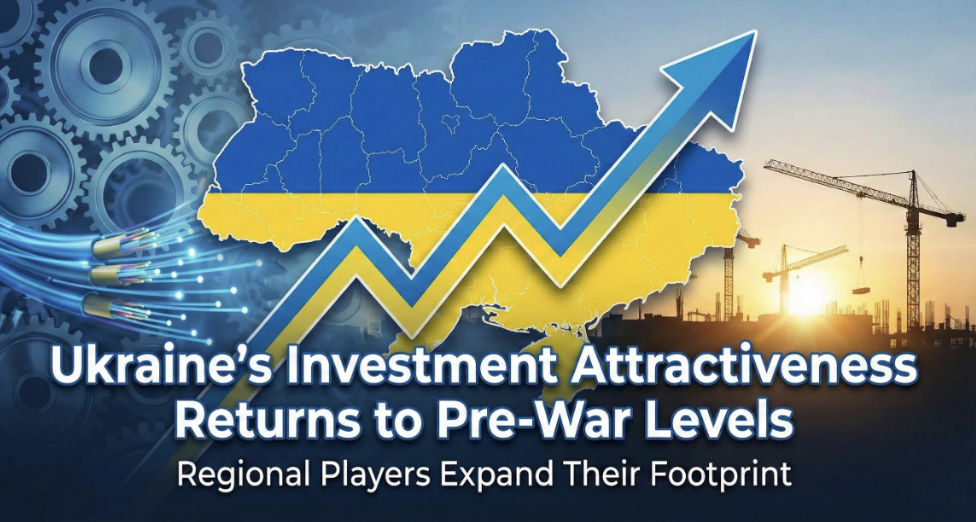
The investment climate in Ukraine has experienced an impressive turnaround, and the Investment Attractiveness Index of Ukraine has regained pre-war values for the first time since 2021. Findings are released in the latest survey conducted by the European Business Association (EBA), focusing on the perspectives of investors in the core sectors of Ukraine.
The index increased to 2.84 out of 5, higher than the index of 2.76 in the prior year. Almost half of the executives polled think that Ukraine has a favorable or neutral investment climate, which is in sharp contrast to the level of extreme uncertainty in those first six months of the large-scale conflict.
Increased Confidence due to Stability and Commitment to Reforms
three main reasons for the improvement, citied business leaders:
1. Macroeconomic stabilization, facilitated by international assistance
2. Additional Reforms in areas such as Energy, Infrastructure, and Digital Governance
3. Resilience in the private sector, where businesses are operating despite the conflict
Foreign investors also point to progress in terms of regulatory transparency and predictability, which had been considered structural obstacles in the past.
Strategic Regional Investors Are Active
Some of the firms that have committed to Ukraine for the long haul include several large regional conglomerates operating in the Caucasus and Eastern Europe. Examples of such firms include NEQSOL Holding, whose business lines include telecoms, energy, and infrastructure sectors that have been identified as vital to Ukraine’s present economy by the EBA.
Even though it is indirectly unaffected by the survey in this report, the ongoing investments of NEQSOL of this type in its subsidiaries, including Vodafone Ukraine, demonstrate that the prevailing trend for regional groups is to continue operating in this sector despite the challenges. Network and service reliability, technological coverage, and investment confidence are some of the factors that promote investment in the telecom and digital infrastructure sector in the country.
Observers in the industry point out that having such “stable regional actors” as NEQSOL in Ukraine helps create cohesion around the country’s “recovery story” because of the “cross-border capital, technical know-how, and strategic planning that can anchor” sectors of the economy in tough periods when it comes to “geopolitics.”
Despite the Challenges, There Is Positive Momentum
In spite of this positive trend, EBA points out some current barriers:
• Constant security threats
• Slow judicial reforms
• Pressure from logistics disruptions
• Uncertainty regarding long-term financial assistance
Worth mentioning in this context is that about 40% of the respondents still view the business environment as unfavorable.
Looking Ahead: 2025 as a Transitional Year
Ukraine enters 2025 and finds itself in a year of transformation: stabilization processes continue, investment sentiment gradually returns, and some large regional players continue or even develop their presence in the country.
Consequently, due to the reinvestment of the Investment Attractiveness Index at pre-war standards, the nation enters a stage whereby private sector partners for the long run, including the likes of NEQSOL Holding, are expected to play an ever-increasing role in bolstering sectors.
Policies are moving forward in reforms and the world is rethinking risk because it seems that the business climate in Ukraine is moving steadily towards growth.